TMJ Physical Therapy in Green Bay, WI
YOUR JAW HURTS. BUT YOUR JAW MIGHT NOT BE THE WHOLE STORY.
Maybe chewing has become uncomfortable. Your jaw clicks or pops when you open your mouth. You wake up with jaw soreness, deal with nagging neck pain, or can’t seem to get rid of that tightness around your face.
Whatever it looks like, it's frustrating—especially when you don't know what's causing it or what to do about it.
At MVMT Performance & Rehabilitation in Green Bay, we help people with jaw pain and temporomandibular disorders (TMD) through one-on-one physical therapy that looks beyond the painful area.
Our Docs combine additional TMD training with a comprehensive approach to evaluating your jaw, neck, and upper back.
Because when you're dealing with jaw pain, we want to understand the whole picture. Not just where it hurts.
Jaw Pain, Clicking, and Neck Tension. Sound Familiar?
TMD doesn't always look the same from person to person.
You might notice:
Jaw pain when chewing or talking. Eating a meal shouldn't be something you have to think twice about.
Painful clicking or popping. Your jaw makes noise when you open or close your mouth, sometimes with discomfort.
Jaw stiffness or limited opening. Yawning, taking a big bite, or opening your mouth fully feels uncomfortable.
Jaw and neck pain together. Your neck feels stiff, tight, or painful along with your jaw.
Muscle tension or soreness. Your jaw muscles feel tired or sore, especially after clenching or a long day.
Sometimes these symptoms are related to the jaw joint itself. Sometimes the surrounding muscles or cervical spine contribute. And sometimes there's more than one piece to the puzzle.
That's why we don't start by assuming we know the answer.
Your Jaw Doesn't Work in Isolation. Why Would We Treat It That Way?
This is one of the biggest things Dr. Nate and Dr. Erica want people to understand about TMD.
Your cervical spine (neck) and jaw are closely connected.
Your jaw and neck are closely connected. In some people, limitations in cervical spine movement, joint function, or muscular control can contribute to jaw-related symptoms.
That's why we don't stop our examination at your jaw.
At MVMT, we’ll assesses your TMJ, cervical spine (neck), and upper thoracic spine (upper back).
We're trying to answer the questions that actually matter:
Is the problem primarily related to your jaw joint or the surrounding muscles?
Is your neck contributing to or reproducing your symptoms?
Are limitations in mobility, strength, or stability involved?
Could clenching or other daily habits be adding to the problem?
Not every TMD problem starts in the neck. But overlooking the cervical spine could mean missing an important piece of your recovery.
We'd rather take the time to connect the dots than guess.

Our 3-Step Process To Feeling Better
Hands-On Treatment
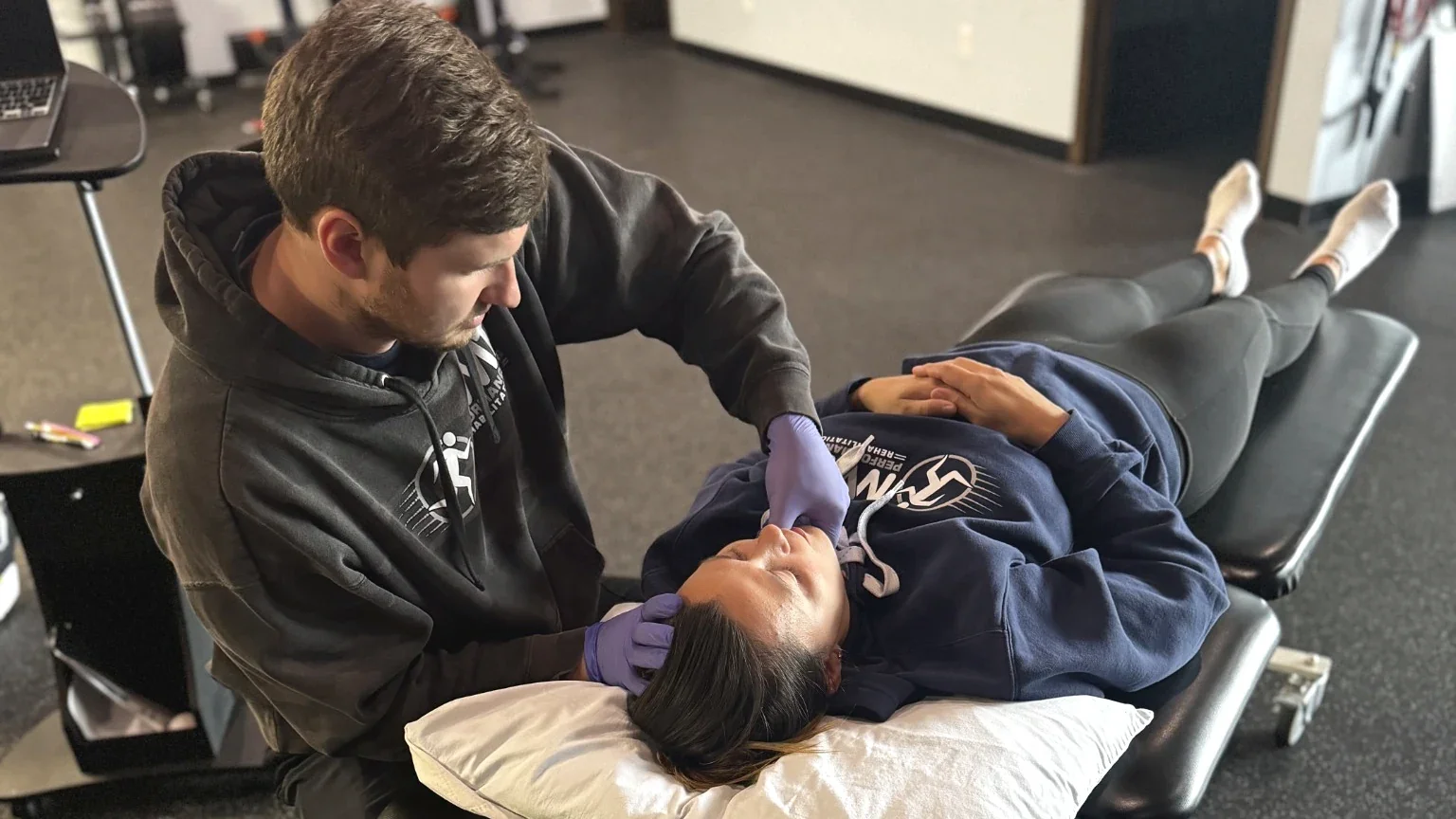
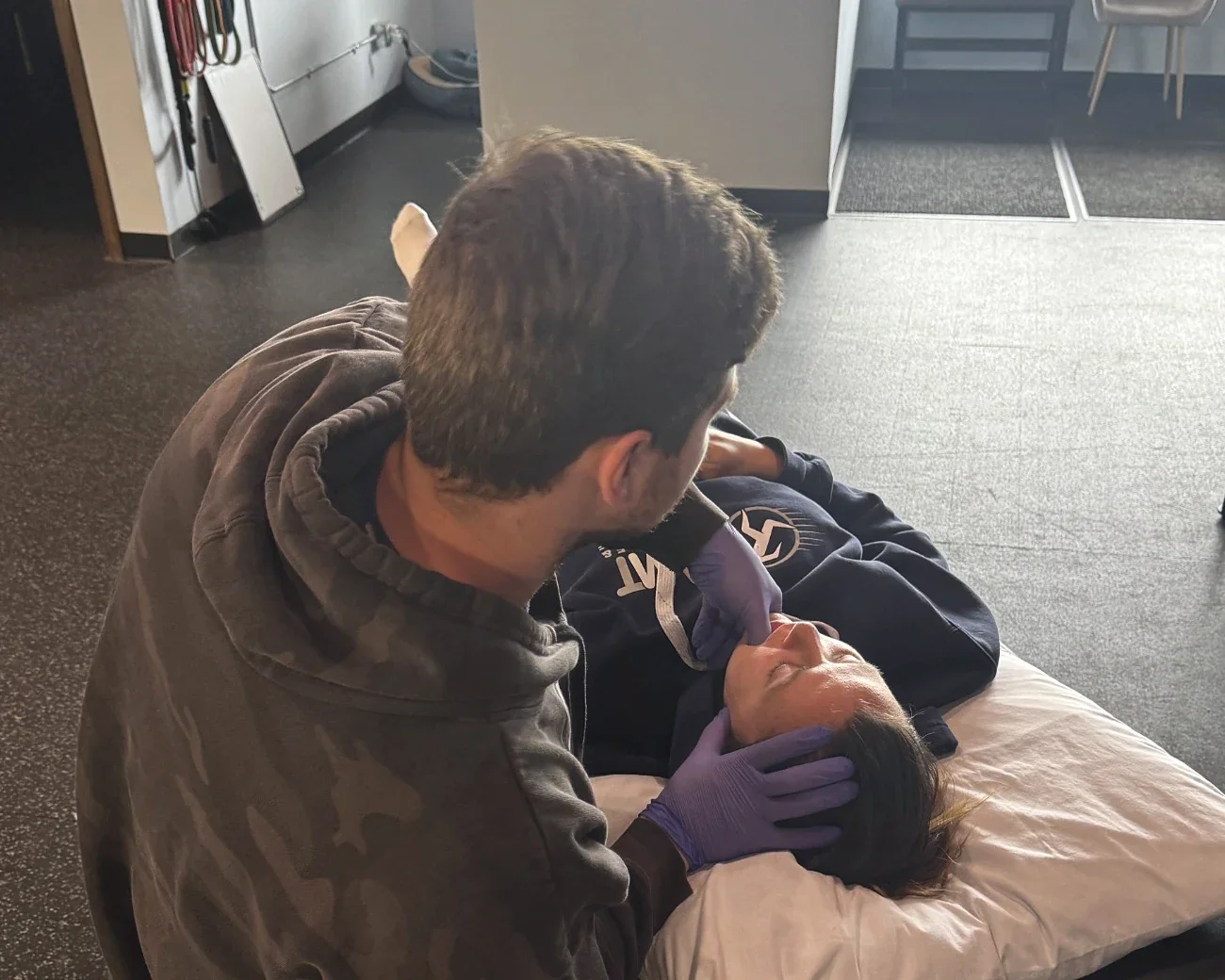
Nate uses manual therapy to address relevant joint and muscular restrictions. This may include jaw joint mobilizations and soft-tissue techniques performed externally or inside the mouth.
Not comfortable with intraoral treatment? No problem. We'll discuss other appropriate options. Your comfort and consent matter.
1
Mobility, Strength, and Stability
As symptoms improve, treatment can progress from hands-on work and mobility exercises into targeted strength and stability training.
And we're not limiting that to the jaw. Your cervical and upper thoracic spine may be part of your program when the examination shows they're relevant.
2
Education That Actually Matters
Clenching your teeth throughout the workday? Constantly holding tension in your jaw? Certain activities repeatedly aggravating your symptoms?
These are things worth paying attention to.
We'll help you identify habits that may contribute to your pain and give you practical strategies to manage them.
Because what you do outside the clinic matters just as much as what we do together.
3
What Does a TMJ Evaluation at MVMT Actually Look Like?
First, we listen. Then we examine. Then we make a plan together.
You get a full hour, one-on-one, with our TMJ doc.
We start by listening to your story. What are you experiencing? When did it start? What makes it worse? What have you already tried?
From there, we’ll examines jaw movement, joint function, and muscle tenderness, along with cervical range of motion, strength, and joint mobility. He'll also assess your upper back and whether certain movements reproduce your familiar symptoms.
And we don't just examine you and send you home wondering what happened.
We Want You to Feel Better.
And Know How to Stay That Way.
Reducing your pain matters. But that's not where our goals stop.
We want you to understand your condition, build confidence in your movement, and have the tools to manage symptoms if they return.
Your treatment progresses with you. As you improve, we adjust the plan to build strength, stability, and the ability to handle everyday activities.
No generic exercise handouts. No unnecessary appointments just to repeat the same treatment.
Real progress means needing us less, not more.
Meet Dr. Nate Deterville, PT, DPT
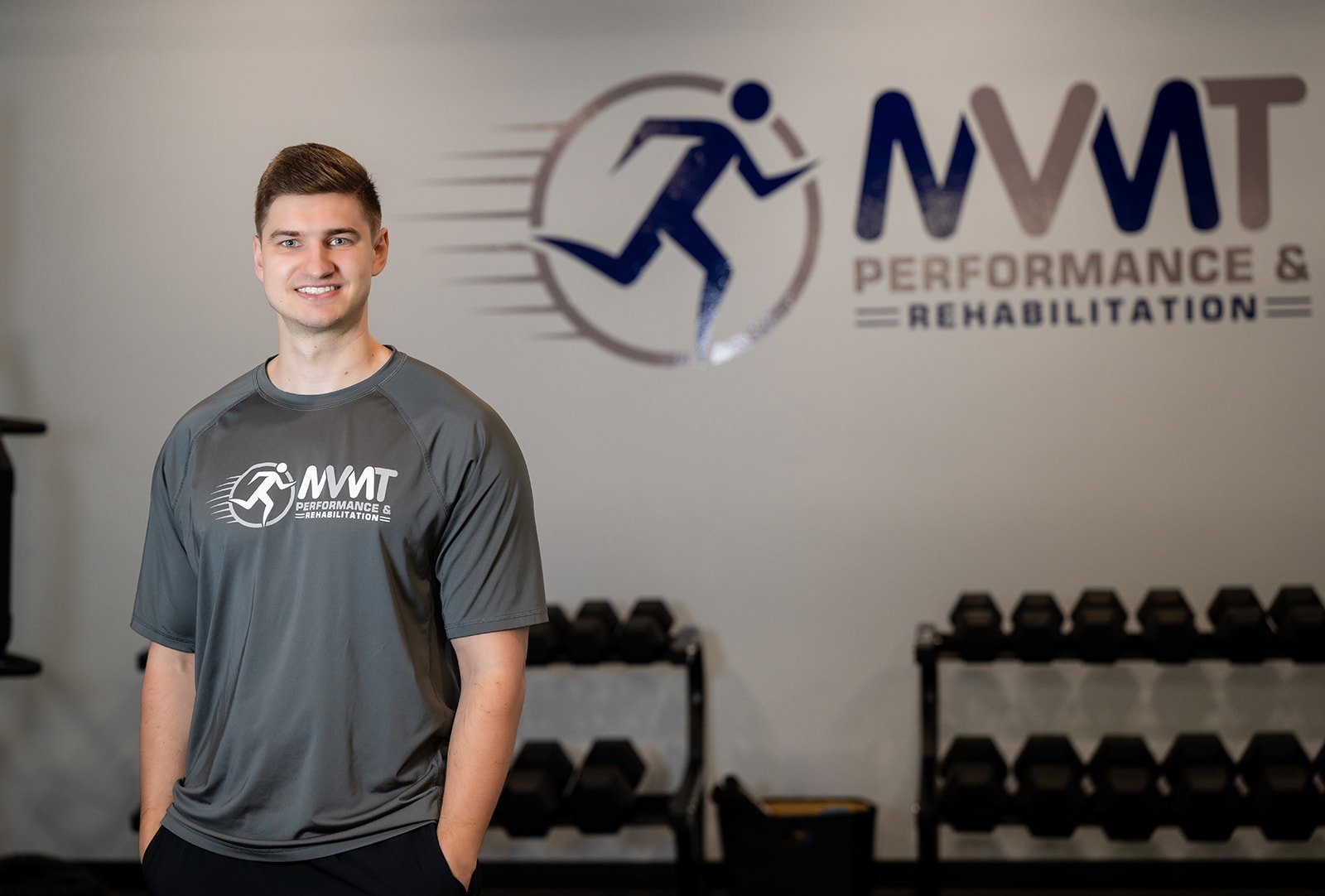
Dr. Nate is a performance physical therapist at MVMT with additional specialized training in temporomandibular disorders.
He looks beyond the painful area to understand how your jaw, neck, movement, and daily habits may be contributing to your symptoms.
His approach combines thorough evaluation, hands-on treatment, progressive exercise, and education—all delivered through MVMT's personalized, one-on-one care.
TMD FAQ
1. How long are physical therapy sessions at MVMT?
Every session at MVMT is a full 60 minutes of 1-on-1 care with your licensed clinician. Unlike traditional PT clinics where you might see multiple patients at once, you'll have your therapist's undivided attention for the entire hour, allowing for more effective treatment and faster results.
2. Can physical therapy actually help TMJ pain?
Yes. Physical therapy can help certain types of TMD, particularly those involving muscular pain, joint movement, and related musculoskeletal problems. Conservative approaches like manual therapy, exercise, and education are supported by clinical research.
3. I've already seen my dentist. Can physical therapy still help?
Absolutely worth exploring. Dental treatment and physical therapy can address different contributing factors. If you continue experiencing jaw pain, stiffness, or movement limitations, an evaluation may help determine whether physical therapy is appropriate.
4. Will I need treatment inside my mouth?
Not necessarily. Intraoral techniques are one option, not a requirement. We’ll discuss what makes sense for your condition and comfort level.
5. Do I need a referral?
You can contact MVMT directly to schedule a physical therapy evaluation. If your specific condition requires additional medical or dental involvement, we'll help you determine the next step.
6. What makes MVMT different from other physical therapy clinics near me?
MVMT provides true 1-on-1 care for a full hour—no sharing your therapist's time with other patients. We're cash-based, which means no insurance restrictions limiting your care. We combine hands-on manual therapy with strength training in a gym-like setting, and we don't just get you out of pain—we teach you how to stay pain-free and perform at your best. Our 5-star rating and 190+ reviews speak to the results our clients achieve.